
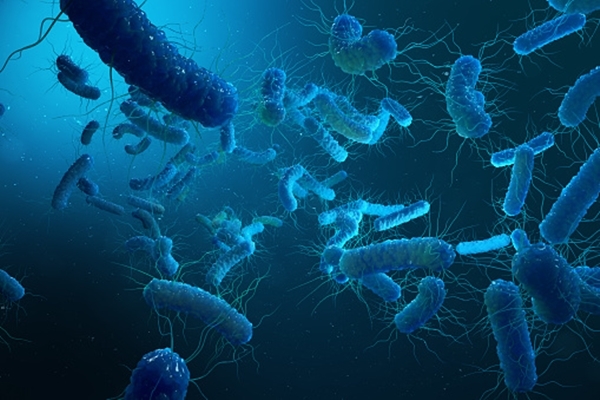
Scientist engineered bacteria to generate electricity from wastewater
London, Sep 9 (IANS) Scientists have engineered E. coli bacteria — the most widely studied microbe — to generate electricity from wastewater.
This groundbreaking achievement in bioelectronics outlines a novel approach that could revolutionise both waste management and energy production.
“Though there are exotic microbes that naturally produce electricity, they can only do so in the presence of specific chemicals. E. coli can grow on a wide range of sources, which allowed us to produce electricity in a wide range of environments, including from waste water,” said Ardemis Boghossian, Professor at EPFL, a public research university in Lausanne, Switzerland.
E. coli bacteria have been harnessed to create electricity through a process known as extracellular electron transfer (EET). The researchers engineered E. coli bacteria to exhibit enhanced EET, making them highly efficient “electric microbes.”
Unlike previous methods that required specific chemicals for electricity generation, the bioengineered E. coli can produce electricity while metabolising a variety of organic substrates.
In the study, the team even tested the technology directly on wastewater that they collected from a local brewery in Lausanne.
“Instead of putting energy into the system to process organic waste, we are producing electricity while processing organic waste at the same time — hitting two birds with one stone,” said Boghossian.
“The exotic electric microbes weren’t even able to survive, whereas our bioengineered electric bacteria were able to flourish exponentially by feeding off this waste.”
The implications of the study extend beyond waste treatment. Being able to generate electricity from a wide range of sources, the engineered E. coli can be utilised in microbial fuel cells, electrosynthesis, and biosensing, to name a few.
In addition, the bacterium’s genetic flexibility means that it can be tailored to adapt to specific environments and feedstocks, making it a versatile tool for sustainable technology development.
“Our work is quite timely, as engineered bioelectric microbes are pushing the boundaries in more and more real-world applications. We have set a new record compared to the previous state-of-the-art,” said lead scientist Mohammed Mouhib from EPFL