
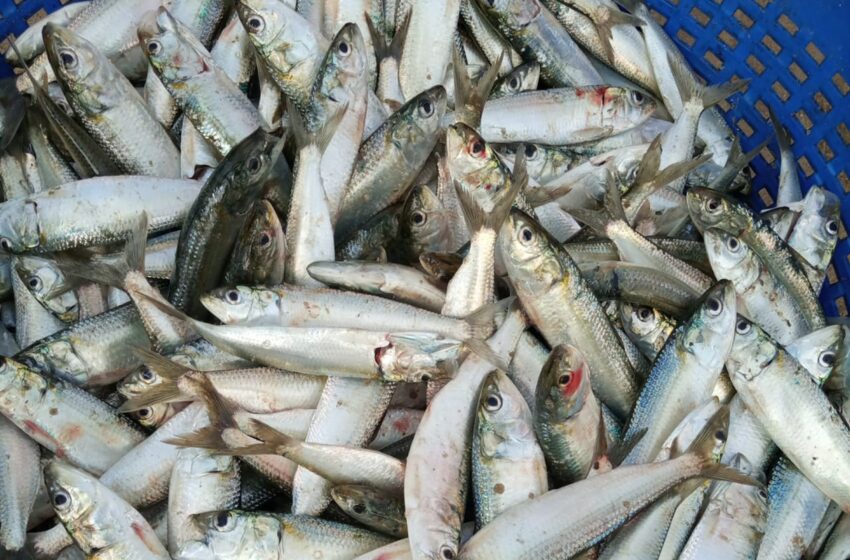
CMFRI scientists unearth genome secrets of ‘Indian oil sardine’ fish
Kochi, Sep 7 ( IANS) In a major breakthrough in Indian marine fisheries research, a team of scientists at the ICAR-Central Marine Fisheries Research Institute (CMFRI) has decoded the whole genome of the ‘Indian oil sardine’ (Sardinella longiceps), a popular food fish.
Incidentally, this is the first time that the genome of a marine fish species from the Indian subcontinent has been decoded.
CMFRI Director Dr A Gopalakrishnan described this development a ‘milestone’ in Indian marine fisheries, saying that the decoded genome will be a valuable resource for understanding the biology, ecology and evolution of the oil sardine.
“This critical genome data could be used to improve the management strategies for the conservation and sustainable utilisation of this fish,” said Gopalakrishnan.
The decoded genome is 1.077 GB in size and contains a total of 46316 protein coding genes.
This landmark research accomplishment was achieved through the cutting-edge Next Generation Sequencing technology by a group of researchers led by Dr Sandhya Sukumaran, Principal Scientist at Marine Biotechnology division of the CMFRI.
This research has been published in the journal Scientific Data of Nature group.
Indian oil sardine is a vital fisheries resource in the Indian subcontinent, contributing substantially, approximately 10 per cent, to the total marine fisheries industry in India.
“This fish is a trans-boundary resource and the whole genome information can also be utilised for certification of the fishery and identification of the origin of catch for monitoring clandestine trade and tracking the movement of this enigmatic fish,” added Gopalakrishnan.
The research team further pointed out that small pelagic fishes like the Indian oil sardines can be considered as model organisms to study the climatic as well as fishing impacts on the Indian Ocean resources, as they respond to variations in environmental and oceanographic parameters.
The sardines are ecologically important part of the marine ecosystem, as they form an intermediate link in the food web and serve as prey for larger predators.
The genome assembly of the sardines is a valuable tool for studying how fish adapt to climate change.
Genetic and genomic investigations found that Indian oil sardines exist in two highly distinct stocks, one in the Indian waters and another in the Gulf of Oman.
“Understanding these genetic differences could help researchers comprehend how environmental and oceanographic conditions impact this species in different regions of the Northern Indian Ocean,” said Gopalakrishnan.