
Astrophysicists spot possible first-ever ‘dark stars’
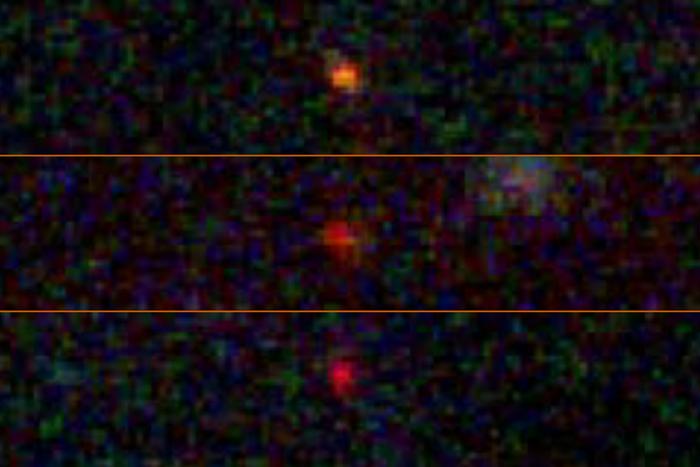
New York, July 15 (IANS) Data from NASA’s James Webb Telescope has caught a glimpse of possible first-ever ‘dark stars’.
Stars powered with dark matter still need proving but could reveal clues about the nature of one of the universe’s great mysteries.
A team of three astrophysicists — Katherine Freese at The University of Texas at Austin, in collaboration with Cosmin Ilie and Jillian Paulin ’23 at Colgate University — analysed images from James Webb.
They found three bright objects that might be “dark stars,” theoretical objects much bigger and brighter than our sun, powered by particles of dark matter annihilating.
If confirmed, dark stars could reveal the nature of dark matter, one of the deepest unsolved problems in all of physics, said the study published in the Proceedings of the National Academy of Sciences.
“Discovering a new type of star is pretty interesting all by itself, but discovering it’s dark matter that’s powering this — that would be huge,” said Freese, director of the Weinberg Institute for Theoretical Physics.
Although dark matter makes up about 25 per cent of the universe, its nature has eluded scientists.
Scientists believe it consists of a new type of elementary particle, and the hunt to detect such particles is on.
The three candidate dark stars were originally identified as galaxies in December 2022 by the JWST Advanced Deep Extragalactic Survey (JADES).
Using spectroscopic analysis, the JADES team confirmed the objects were observed at times ranging from about 320 million to 400 million years after the Big Bang, making them some of the earliest objects ever seen.
Dark stars could theoretically grow to be several million times the mass of our sun and up to 10 billion times as bright as the sun.
“We predicted back in 2012 that supermassive dark stars could be observed with JWST,” said assistant professor Ilie.