


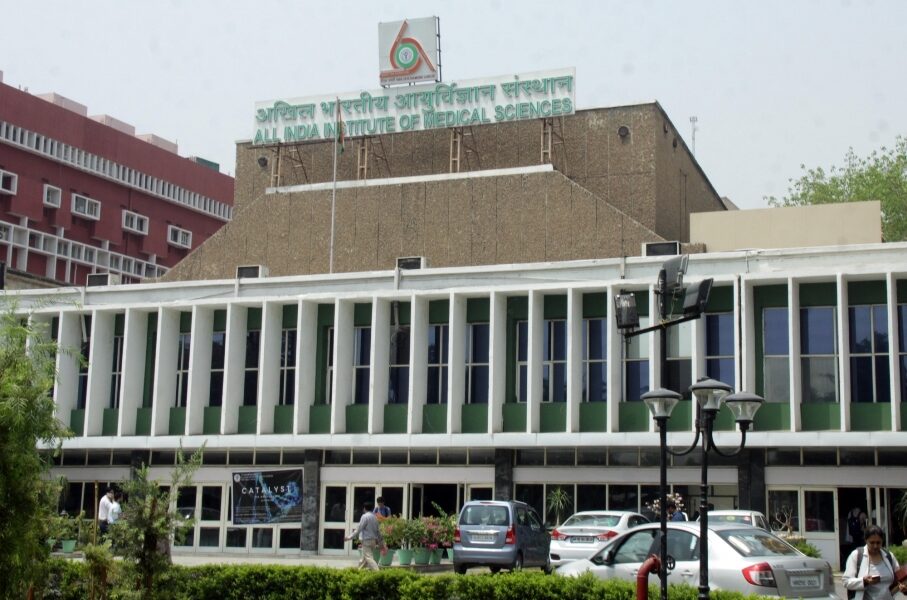
AIIMS develops telerobotic ultrasound system with IIT Delhi
New Delhi, Aug 15 (IANS) The All India Institute of Medical Sciences (AIIMS) has jointly developed a telerobotic ultrasound system in collaboration with IIT Delhi and Addverb Technologies.
The research collaboration between IIT Delhi and AIIMS allows remote ultrasound access through a robotic arm.
The research team at AIIMS was led by Chandrashekhara, while Chetan Arora and Subir Kumar Saha led the IIT-D team. The lead contributor for the research was Suvayan Nandi from Addverb Technologies along with other researchers.
This system allows performing ultrasound from remote locations through the robotic arm. In the routine ultrasound setting, the doctor (radiologist) stands in close contact with the patient for the entire scan duration.
However, cross-sectional imaging is preferred in the current pandemic scenario with stringent social distancing requirements — a more expensive and less dynamic technique.
Ultrasonography is a non-invasive, non-ionizing, cost-effective, rapid, bedside, and readily available modality with immense use in point-of-care and follow-up examinations.
Chandrashekhara said, “This system will promote healthcare and make our system more prepared for further pandemics. Besides its role in the pandemic, it will allow a better outreach of ultrasound imaging to remote and rural areas of India. The radiologist manipulates the ultrasound probe remotely from a remote location, acquires the ultrasonographs, and then transmits them to the monitors at the doctor’s end through a WiFi network.
“Sitting at a remote location, the doctor can now visualise all the images and assess the patient, similar to a clinical setting. The facility can also be extended for global outreach.”