


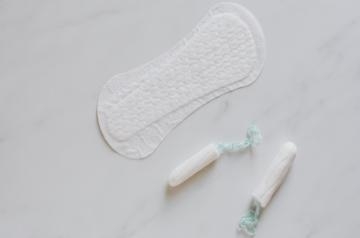
Study finds no increased risk of menstrual changes after Covid vax
London, May 4 (IANS) A Swedish study of nearly 3 million women has found no evidence of an increased risk of menstrual changes after Covid-19 vaccination.
Many women have reported changes to their periods after a Covid-19 vaccination, such as the number of days they bleed and the heaviness of the flow.
Analyses of individual vaccines and risk of postmenopausal bleeding suggested a 23-33 per cent increased risk after 8-90 days with Pfizer-BioNTech, and Moderna after the third dose, but a less clear association with Oxford-AstraZeneca.
In premenopausal women, weak associations were found for menstrual disturbance or bleeding after vaccination with any dose (13 per cent or 8 per cent after 1-7 days and 6 per cent or 1 per cent after 8-90 days, respectively).
However, adjusting for other factors almost completely removed these weak associations, suggesting that a causal effect is unlikely, said researchers from the University of Gothenburg in Sweden.
“We observed weak and inconsistent associations between SARS-CoV-2 vaccination and healthcare contacts for postmenopausal bleeding, and even less consistent for menstrual disturbance, and premenstrual bleeding,” said the team, in the paper published by The BMJ.
“These findings do not provide any substantial support for a causal association between SARS-CoV-2 vaccination and healthcare contacts related to menstrual or bleeding disorders,” they added.
The study included 2,946,448 women aged 12-74 years who were vaccinated against Covid.
Risks were assessed by vaccine (Pfizer-BioNTech, Moderna, or Oxford-AstraZeneca) and dose (unvaccinated and first, second, and third dose) over two time windows (1-7 days, considered the control period, and 8-90 days).
More than 2.5 million (88 per cent) of women received at least one Covid vaccination and over 1.6 million (64 per cent) of vaccinated women received three doses during the study period.
The highest risks for bleeding in postmenopausal women were seen after the third dose in the 1-7 days risk window (28 per cent) and in the 8-90 days risk window (25 per cent).
Adjusting for socioeconomic factors, previous healthcare use, and for several specific medical conditions had only a modest effect on these results.
The team said these are observational findings and also have several limitations.
But this was a large study with near complete follow-up, and the findings do not provide any substantial support for a causal association between Covid vaccination and diagnoses related to menstrual or bleeding disorders.